
Whole-Person Care
The Art of Listening - And Why It Changes Everything
The art of listening goes far beyond your ears. Discover how active vs passive listening shapes your relationships, your stress levels, your body, and your overall wellbeing.
Category: Wellbeing + Communication
"I feel like no one really hears me. Not my doctor. Not my partner. Sometimes not even myself."
This is one of the most common things we hear from women who come to us - not just a feeling of being dismissed medically, but a deeper sense of disconnection. The art of listening is something most of us were never taught, and its absence quietly costs us more than we realize: in our relationships, our stress levels, our sense of self, and our physical health.
In Turkish there is a saying: "Söz gümüşse, sessizlik altindır" - if speech is silver, then silence is gold. True listening begins in that silence. And learning to inhabit it - with others and with yourself - may be one of the most powerful things you can do for your wellbeing.
What does it actually mean to truly listen?
Hearing is passive - sound waves enter, your brain decodes them. It happens automatically. Listening is something completely different. It is an active, whole-body act of presence that requires you to set aside your own inner monologue and genuinely orient toward another person - or toward yourself.
Research in communication science tells us that words carry only a fraction of what is actually being conveyed:
- 7% of meaning comes from the words we actually use
- 38% is carried by tone of voice and intonation
- 55% is communicated through body language and expression
When we listen only to words, we miss nearly everything. The art of listening means tuning into the full signal - facial expressions, posture, energy, what is left unsaid. We do not only listen with our ears. We listen with all our senses, and even what we call our "sixth sense" - which is really the brain's rapid integration of dozens of subtle cues into one felt knowing.
We listen with: Sight / Sound / Touch / Smell / Intuition
We are always immersed in an information field - a constant stream of verbal and non-verbal data flowing between us and the people and environments around us. What we do with what we hear, and how fully we receive it, shapes every relationship we have.
What is the difference between active and passive listening - and why does it matter for your health?
ACTIVE LISTENING
Fully present, curious, and non-judgmental. You are not preparing your reply - you are genuinely trying to understand. You ask clarifying questions. You notice what is not being said. People who feel actively listened to show measurably lower stress hormones, greater trust, and more willingness to be honest and open.
PASSIVE LISTENING
Physically present, mentally elsewhere - composing your response, distracted, or simply waiting for your turn to speak. In casual settings this is harmless. But in relationships that matter, the other person always feels it. Over time, chronic passive listening quietly erodes safety, trust, and connection - with real physiological consequences for both people.
PAUSE & REFLECT - Questions on Listening:
- When someone is speaking to you, are you listening to understand - or listening to respond?
- When did you last feel truly heard? What did the other person do - or not do - that made the difference?
- When something triggers a strong reaction, do you pause to ask what the person actually meant - or do you react to the meaning your mind assigned?
- Which listening style dominates your most important relationships right now? What would one small shift look like?
Every message we receive passes through a filter - our own beliefs, fears, past experiences, and unmet needs. We rarely hear exactly what was said. We hear what our mind constructed from it. The most powerful reset is deceptively simple: ask before you assume. "What did you mean by that?" is one of the most relationship-saving questions that exists.
How does the quality of listening directly affect our wellbeing?
This is where the art of listening becomes something far more than a communication skill. The science is clear: how heard we feel - and how well we listen to others - has measurable, physiological consequences for our health.
WHAT THE RESEARCH TELLS US
The link between listening and health is not poetic. It is documented in physiology, neuroscience, and clinical research.
- Feeling heard lowers cortisol - the primary stress hormone tied to inflammation, immune suppression, and cardiovascular disease.
- Loneliness, which is often rooted in feeling chronically unheard, is now classified as a public health crisis with health consequences equal to smoking 15 cigarettes a day.
- Active listening in therapeutic settings reduces anxiety and depression more effectively than advice-giving alone - a finding at the foundation of Carl Rogers' person-centered therapy.
- Couples who demonstrate high active-listening behaviors report not only greater relationship satisfaction, but measurably stronger immune function - a connection replicated across multiple longitudinal studies.
- When two people experience genuine neural coupling (the brain synchronization that occurs during true deep listening), understanding and empathy increase significantly.
The quality of our listening shapes the quality of our relationships. And the quality of our relationships shapes the quality of our health. This is not a metaphor - it is biology. We consistently see how relational stress from feeling unheard manifests physically long before it shows up in any lab result.
Are you listening to your body - or waiting for it to shout louder?
The art of listening does not end with other people. The most intimate listening practice of all is turning that attention inward - to the body that has been communicating with you, patiently and persistently, your entire life.
The body speaks in symptoms. Long before the mind finds language for stress, grief, overwhelm, or disconnection, the body is already sending signals. The question is whether we are listening - or whether we are reaching for a painkiller, a distraction, or a quiet resignation to feeling "not quite right."
BODY SIGNALS WE OFTEN IGNORE
Migraines & Persistent Headaches
Frequently linked to suppressed emotion and sustained muscular tension from unacknowledged stress. Research in psychosomatic medicine shows migraine sufferers report significantly higher rates of emotional repression than the general population. The body is speaking. Are we listening?
Digestive Distress & Bloating
The gut contains over 500 million neurons - its own nervous system. The gut-brain axis registers anxiety and unprocessed emotional stress before conscious awareness catches up. A stomach ache is often the body's first language for what the mind has not yet found words for.
Heart Palpitations & Chest Tightness
The vagus nerve connects heart, gut, and brain in one continuous feedback loop. Chronic relational stress - especially the stress of feeling unheard or chronically dismissed - activates the sympathetic nervous system with measurable cardiovascular consequences over time.
Chronic Pain & Muscular Tension
As Dr. Bessel van der Kolk demonstrated in The Body Keeps the Score, unprocessed trauma and chronic emotional stress are stored physically in the body's tissues - not just as memories, but as real, measurable pain and holding patterns that will not resolve until the underlying experience is finally heard.
The body does not punish us. It escalates its signal until it is heard. What begins as occasional tension headaches can become chronic migraines. Intermittent digestive discomfort becomes a chronic condition. The body is not failing - it is asking a question. Listening means asking with genuine curiosity: what root cause am I not yet looking at? This is not a replacement for medical care. It is its most important companion - and it is at the heart of the way we work at HER Healthspan Method.
Turkish proverb: "Söz gümüşse, sessizlik altindır."
"If speech is silver, silence is gold." - Asking the right question, and truly listening to the answer, is where healing begins.
What does it look like to practice the art of listening in real life?
Listening is not a passive state. It is a daily practice - one that applies to how we receive others, how we respond to what we hear, and how honestly we attend to what our own body, emotions, and relationships are telling us.
In our work with women, we find that the women who experience the most profound shifts in their health are often the ones who begin listening more carefully - to their own stories, their own symptoms, and the patterns their body has been communicating for years. The answers are rarely in the numbers alone. They live in the full story.
SIMPLE PRACTICES FOR DEEPER LISTENING
- Before reacting to what someone says, take one breath and ask: "What did they actually mean?" Not what you heard - what they meant.
- When a symptom shows up - pain, fatigue, digestive distress - ask it a question: "What are you trying to tell me?" Sit with the answer before reaching for a fix.
- Practice one conversation this week where your only goal is to understand, not to respond. Notice what shifts.
- When you notice yourself feeling unheard, name it - first to yourself, then gently to the other person. "I am not sure I'm being understood. Can I try again?"
"We listen not just to understand others - but to understand ourselves. And that understanding is where healing begins."
The art of listening is a lifelong practice. It asks us to slow down in a world built for speed, to stay curious when we feel certain, to ask questions when we feel defensive - and to turn our full attention inward when our body is speaking.
We listen to people. We listen to our environment. And we listen to our body. The question is not whether it is communicating. It always is. The question is whether we are ready to hear it.
Ready to be truly heard - and to finally hear what your body has been saying?
Book a free discovery call with our team. We listen first - to your full story, not just your numbers - and build from there.
Available to women in New Jersey, Connecticut, and online across the US.
This article is for education only and isn’t medical advice, diagnosis or treatment. Always work with your physician for medical concerns and before changing medications or care.
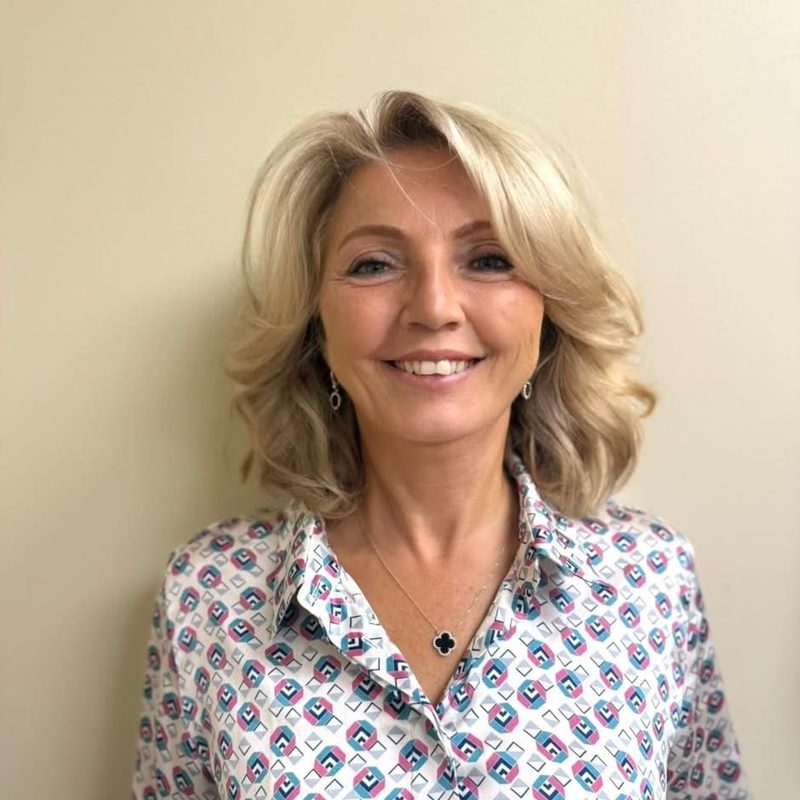
Nesko Elden
MBA · BS Food Engineering · Certified Integrative Nutrition Coach · Reiki Master & Breathwork Practitioner
Integrative nutrition & resilience coach for women. “Food is medicine, but joy is the ultimate healer.” Read Elden’s full bio →